StorySitting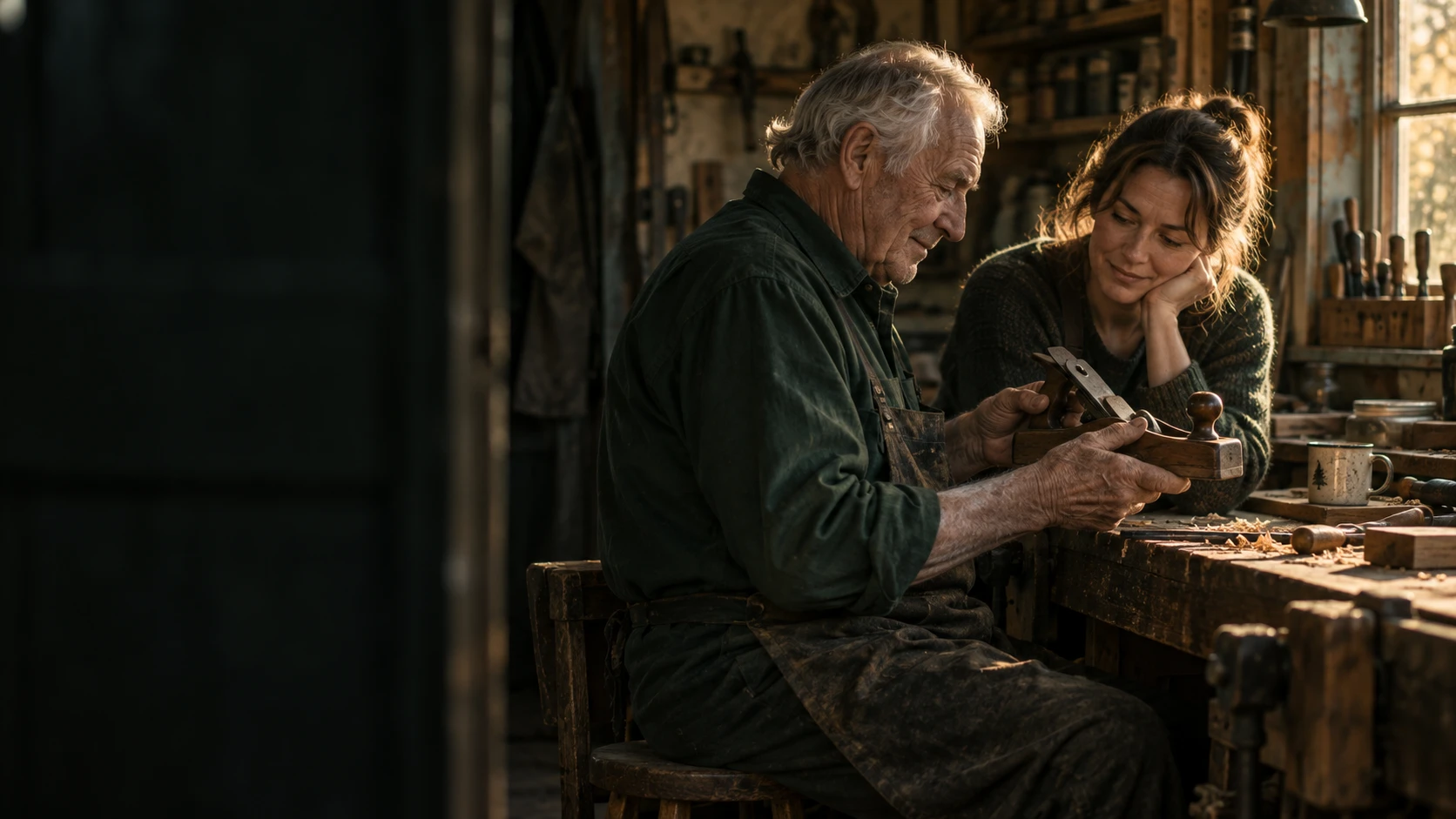
Make the invitation smaller
“Tell me your life story” can be a lot to ask over a cup of tea. It leaves the other person to choose a starting point, decide what matters and wonder how long they're supposed to talk. Try asking about one thing you already want to understand.
“Would you tell me about the shop you worked in?” gives the conversation somewhere to begin. So does “I've always wondered how you learned to fix things.” Neither requires them to agree that their whole life belongs in a book.
If they say nothing interesting happened, you don't have to argue. You can explain your own curiosity: “I don't know what an ordinary workday was like for you then. I'd like to hear about that, if you feel like it.” Their answer may still be no. Leave room for that.
Let an ordinary object do some of the asking
Choose something they're comfortable talking about: a recipe, a tool, an old photograph, a favorite song, a uniform, or a place they know well. Invite them to explain it rather than asking them to perform a polished memory.
Try one of these openings
- That tool looks well used. What did you first use it for?
- Who showed you how to make this, and what did they do differently?
- Where did you usually hear that song?
- When you walked into work, what was the first thing you had to do?
- What would you point out if we walked down your old street?
These are invitations, not a technique that guarantees a response. An object may bring up something they'd rather not discuss. Put it away or change the subject if they want to.
Follow one detail instead of asking five new questions
If they mention a coworker, you already have somewhere to go next. Ask about that person. If they describe a long bus ride, ask what the route was like. You don't have to steer the conversation back to your original list.
Here is a made-up example of the difference:
Parent: “I worked at the garage for a while.”
You: “What did you do first when you got there in the morning?”
Parent: “Unlock, usually. Frank was always late.”
You: “What was Frank like?”
The second question comes from what they just said. It doesn't demand a dramatic event or a lesson for future generations. If all you learn is who opened the garage, you've still learned something you didn't know.
Give a short answer some space
A pause doesn't need to be filled immediately. Let the person finish, and avoid answering your own question before they have a chance. You can use a brief follow-up such as “What happened next?” when it fits.
Skip the rapid sequence: Where was it? What year? Who else? How did you feel? Choose the detail that matters now and let the rest wait. If you lose track of a name, jot it down to ask about later rather than interrupting every sentence.
The Smithsonian's oral-history interviewing guide recommends open-ended questions, attentive listening and follow-ups that respond to the conversation. It is a useful starting point; the prompts and mini-conversation here are our own.
Ask what would make this comfortable
Some people want to know the topics in advance. Some would rather chat while looking through a few pictures than sit across a table. Ask which they prefer. Choose a time that suits them, with as few competing distractions as practical.
Make recording a separate choice: “Would you like me to record this, take a few notes, or just listen?” Explain who would receive the recording. If they don't want a record kept, enjoy the conversation without making one. Don't quietly switch on your phone.
A family member may prefer talking with a sibling, a friend or someone else. That isn't a failure. Offer the questions if they're useful and let the person decide whom to talk with.
Know when to stop
If they say “not today,” keep changing the subject, become upset, or simply seem ready to do something else, ask whether they'd like to leave it there. Don't use guilt about time running out to get another answer.
There is no required length and no score for how much you collect. A ten-minute conversation is an option, not a target they have to meet. You can ask later whether there's another topic they'd enjoy, without turning every visit into a recording session.
Thank them for the specific thing they shared: “I liked hearing about your first workshop.” That can be more natural than announcing that you've captured an important piece of their legacy.
Keep a small story in their own words
If they agreed to notes or recording, write a short account afterward. Keep the details they actually gave you. Don't add dialogue, emotions or a dramatic ending to make it read more like a story.
Let them read or hear it if they want to, and ask what can be shared. A correction belongs in the record. So does a request to leave something out. You can keep an uncertain detail uncertain rather than quietly filling it in.
Download the free gentle-conversation planner. It has space for one object or place, an opening question, a few follow-ups and the person's recording and sharing preferences. No email needed.
When they're ready for more, our 52-question guide offers topics to choose from. Or try five family photos and the stories behind them. The point is to hear what they want to tell you.